Medical Weight Loss Tampa | medicalweightlosstampa.com
medicalweightlosstampa.com | Tampa, FL
Explained by the Clinical Team at Medical Weight Loss Tampa
Published: August 9, 2026 | Updated: August 9, 2026
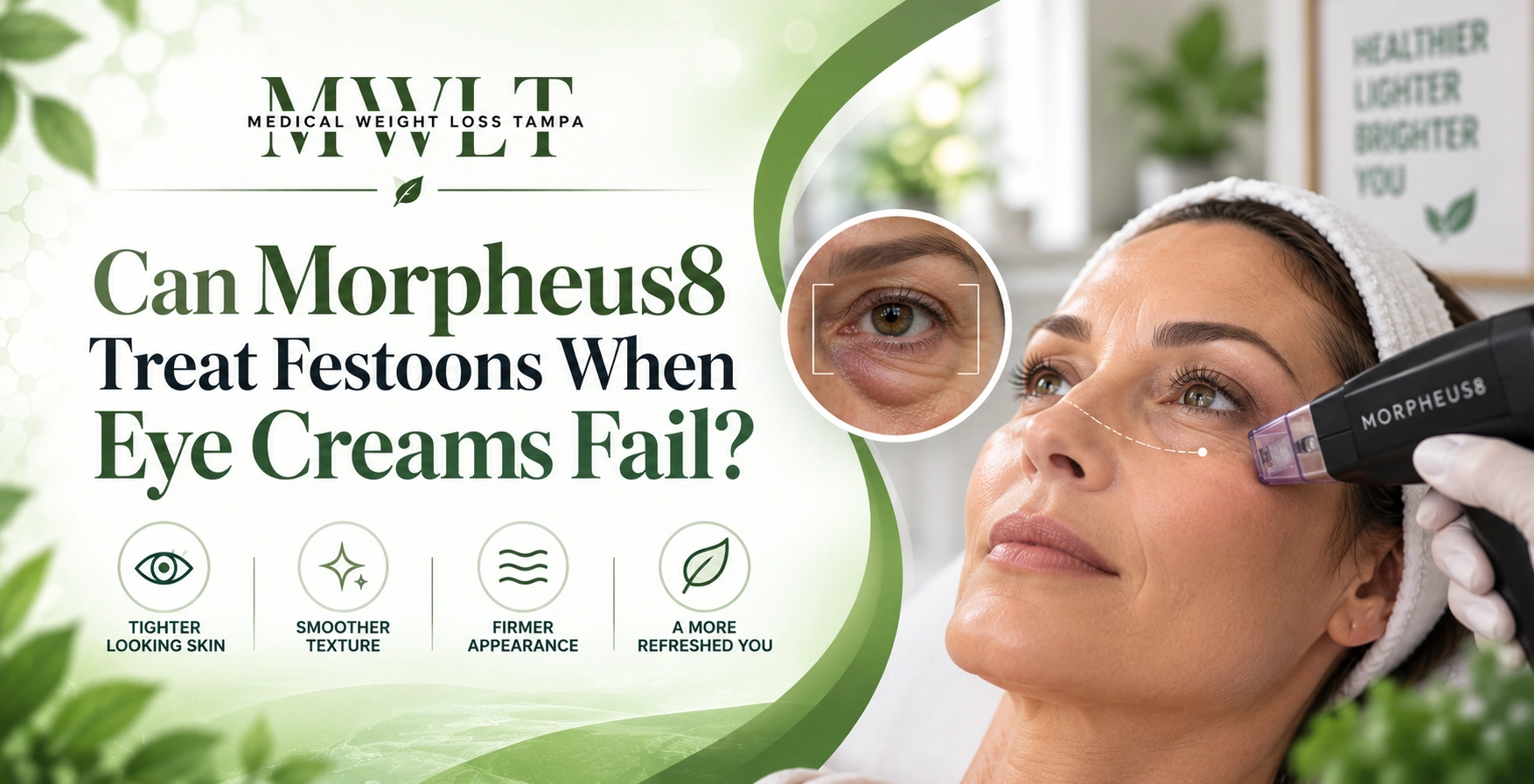
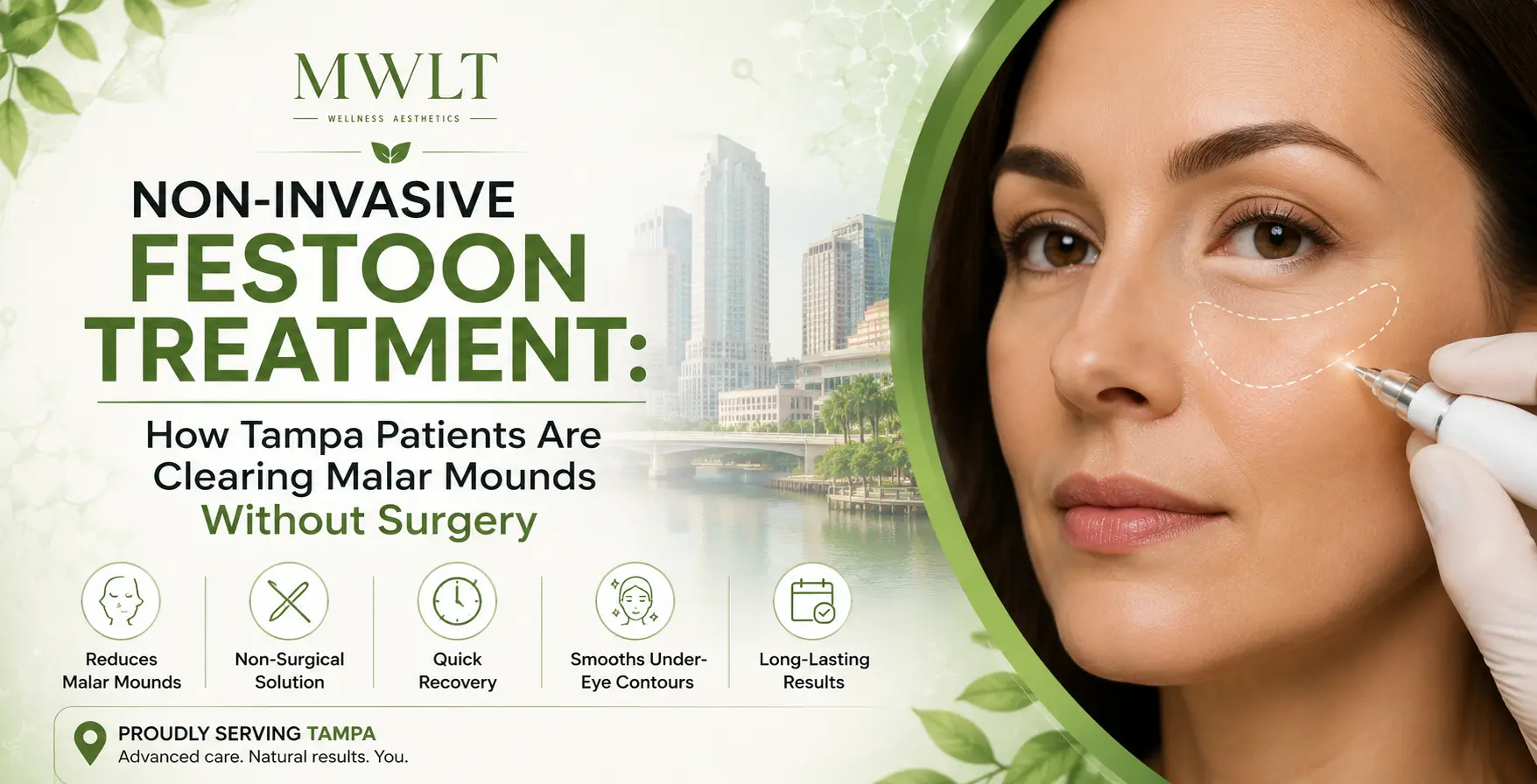
Non-invasive festoon treatments use radiofrequency energy and a good old-fashioned skin tightening approach to shrink down those puffy malar mounds. Now, it’s not going to completely erase a real bad Stage 3 festoon. But if you are dealing with a mild or moderate case, it firms up the tissue without any surgery. You get no stitches and you don’t have to spend weeks hiding inside your air-conditioned house.
Key Points
- Those malar mounds sit right between your lower eyelid and the cheekbone. They aren’t actually under the eye itself.
- Radiofrequency is the main non-surgical procedure that actually has the medical numbers to back it up.
- Our lovely Florida humidity and the blazing sun make these festoons worse, not better.
- Filler and Botox don’t fix festoons. In some cases, filler makes them worse.
- Severity determines the ceiling. Mild cases respond well. Advanced ones need a surgeon.
Average age in RF facial tightening study
(Source figures cited below.)
Weeks skin firmness kept improving post-RF
(MDPI Bioengineering study)
Festoon cases in one study that were acquired, not congenital
(PubMed retrospective review)
What Exactly Are Festoons and Malar Mounds?
A festoon is not a tired eye bag. It is a chronic pocket of fluid and lax tissue that pools in the prezygomatic space, the shelf of skin sitting right on top of the cheekbone. EyeWiki, the ophthalmology reference maintained by the American Academy of Ophthalmology, classifies festoons as chronic collections of edematous soft tissue localized to the infraorbital and malar regions, distinct from garden-variety under-eye puffiness.
Malar mounds are the congenital cousins. Same location, same look, different origin story. Genetics builds them early. Sun, gravity, and fluid retention build festoons later. Either way, the fix has to address structure, not just skin surface. That is where creams and cold compresses hit a wall fast.
An oculoplastic practice up in Hartford points out that people confuse festoons with malar bags most of the time. The pros mix words up, too. Well, the right diagnosis matters a whole lot because the game plan completely changes depending on what you actually have.
Not Sure If It's a Festoon or Just Puffiness?
Book a consultation at Medical Weight Loss Tampa and get a real answer, not a guess.
Why Do Festoons Get Worse in Florida?
Heat swells tissue. Salt air and sun accelerate collagen breakdown. Humidity keeps skin damp and slack for months at a stretch. Tampa Bay checks every box that makes malar mounds progress faster than they would in a drier, cooler climate.
Most of our surveys show that folks all around the Tampa Bay area notice real flare-ups after a long weekend out on the boat, beach trips, or even just driving home from work with the windows rolled down. That salt air and UV damage don’t take a vacation.
- Year-round sunshine speeds up the loss of collagen and elastin that holds everything together.
- High humidity makes your body hold onto fluid right in that malar fat pad.
- Living near the coast means a bit more salt in the air and the diet, which makes that swelling around the eyes look worse.
What Non-Surgical Options Can Shrink Your Malar Mounds?
Radiofrequency is sitting at the very top of the list for a good reason. A 2024 study published in MDPI's Bioengineering journal tracked twenty women through monopolar RF treatment and found skin firmness in the cheek increased at four weeks and kept improving through 24 weeks. That is measured tissue change.
Microneedle RF, specifically, has periorbital data behind it. A study in PMC following patients for six months documented significant improvement in the festooned infraorbital eye-bag that held through the entire follow-up window. Filler and light chemical peels help some patients smooth the crease around a mound, but they camouflage more than they correct.
Mild puffiness
Early laxity and subtle fluid collection along the upper cheek area.
Persistent mound, visible all day
Noticeable volume pooling and skin slackness across the prezygomatic space.
Festoon overhangs the cheek, skin folds
Advanced structural sagging requiring specialist or surgical consultation.
When Does a Festoon Need Surgery Instead?
Severity is the deciding factor, not preference. A retrospective review published on PubMed covering 89 surgical festoon cases found that 81 of them were acquired festoons, and nearly half of those patients had already tried some form of correction first. Non-surgical treatments often yield unsatisfactory results once a festoon reaches that advanced, overhanging stage.
That is the honest line. RF and microneedling own the mild-to-moderate lane. Direct excision and midface lift procedures own the severe lane. Anyone promising surgical-grade results from a cream or a single laser pass in that advanced stage is selling a story, not a treatment.
Most of the festoon cases we see at our Tampa clinic are Stage 1 or Stage 2. Patients wait years thinking nothing short of surgery will help, when a series of radiofrequency sessions gets them looking rested again without a single incision.
“Most of the festoon cases we see at our Tampa clinic are Stage 1 or Stage 2. Patients wait years thinking nothing short of surgery will help, when a series of radiofrequency sessions gets them looking rested again without a single incision.”
— Dr. Emily Devol Webster, Medical Director, Medical Weight Loss Tampa
Will Filler or Botox Fix a Malar Mound?
The short answer is usually not and sometimes it completely backfires on you. This is one of the most common and most expensive mistakes people make before they ever get a real diagnosis.
- Hyaluronic acid filler loves water. It actively pulls moisture right toward itself. If a provider places filler near a spot where your lymph nodes are already struggling to drain fluid, that filler is going to draw even more liquid into the exact same space. Instead of hiding the festoon, it inflates it. Clinical guidance on malar bag treatment options notes that filler-induced malar edema is a recognized complication, and the fix is often dissolving the filler with hyaluronidase before any other treatment can even begin.
- Botox has a narrower, more legitimate use here. Some providers use a small, precise Botox injection as a diagnostic test, not a fix. If relaxing a specific muscle temporarily reduces the mound, that confirms muscle activity is contributing to the problem. It is a smart diagnostic tool. It is a weak long-term solution on its own.
If your last provider only offered filler for your under-eye puffiness and it made things look worse a few weeks later, that is a strong sign you were dealing with a festoon, not standard volume loss.
A Side-by-Side Comparison of Your Options
Let us look at how the three real paths stack up so you can decide where to start your journey.
| Option | Downtime | Best For | Where Tampa Patients Get It |
|---|---|---|---|
| Radiofrequency skin tightening | None | Stage 1 to 2 mounds, early laxity | Medical Weight Loss Tampa (Evolve Tite) |
| Filler camouflage | 1 to 2 days | Softening the crease, not the mound | Med spas and dermatology offices |
| Surgical excision | 2 to 4 weeks | Stage 3, long-standing festoons | Oculoplastic or plastic surgeon |
What Is the Cost for This Treatment Around Tampa?
Pricing for radiofrequency skin tightening down here usually runs on a per-session basis. Most folks end up booking a small series rather than just a single visit if they want results that last. That is just standard practice across the board with any real provider, not some trick to get more money out of you. The thing that really changes is who is actually operating the machine.
Look for a provider under medical direction, not a spa technician working off a weekend certification. Medical Weight Loss Tampa runs its Evolve Tite treatments and broader Empower body contouring line under physician oversight at its Ehrlich Road location, with medical-grade skincare layered in afterward to protect results against Florida sun. That combination, device plus oversight plus aftercare, is what separates a real result from a temporary glow.
If you look at the wider research, like an overview from Orange County Plastic Surgery, they point to a 2026 clinical trial showing that monopolar radiofrequency hits all the right marks for safety and working well over a six-month stretch. This is not some weird science experiment anymore. It is proven, repeatable, and completely up to date for 2026.
Ready to Address Your Malar Mounds the Right Way?
Medical Weight Loss Tampa offers physician-guided Evolve Tite treatment at our Ehrlich Road clinic. New patients start at only $47.
Frequently Asked Questions
Can festoons go away on their own?
No. Fluid and lax tissue in that pocket do not resolve without intervention. Mild swelling from allergies or salt intake can fade, but a true festoon stays.
Does losing weight change how festoons look?
Sometimes. Weight loss can make them a bit worse at first because the fat cells in your face shifts around. But lowering your overall inflammation can help out mild cases over the years to come.
How many RF sessions are typically needed?
Most plans are 3 to 6 sessions over a few weeks. It takes a couple of months for the results to come together.
Is festoon treatment covered by insurance?
Rarely. It is classified as cosmetic, so most Tampa patients pay out of pocket or use financing options like CareCredit.
Disclaimer: This article is provided for general information only and does not constitute medical advice. Individual results from any cosmetic treatment vary based on skin condition, severity, and overall health. Schedule a consultation to determine the right treatment plan for your specific case.
Medical Weight Loss Tampa | 5111 Ehrlich Rd. Ste 128, Tampa, FL 33624