Medical Weight Loss Tampa | medicalweightlosstampa.com
medicalweightlosstampa.com | Tampa, FL
Explained by the Clinical Team at Medical Weight Loss Tampa
Published: October 7, 2026 | Updated: October 7, 2026
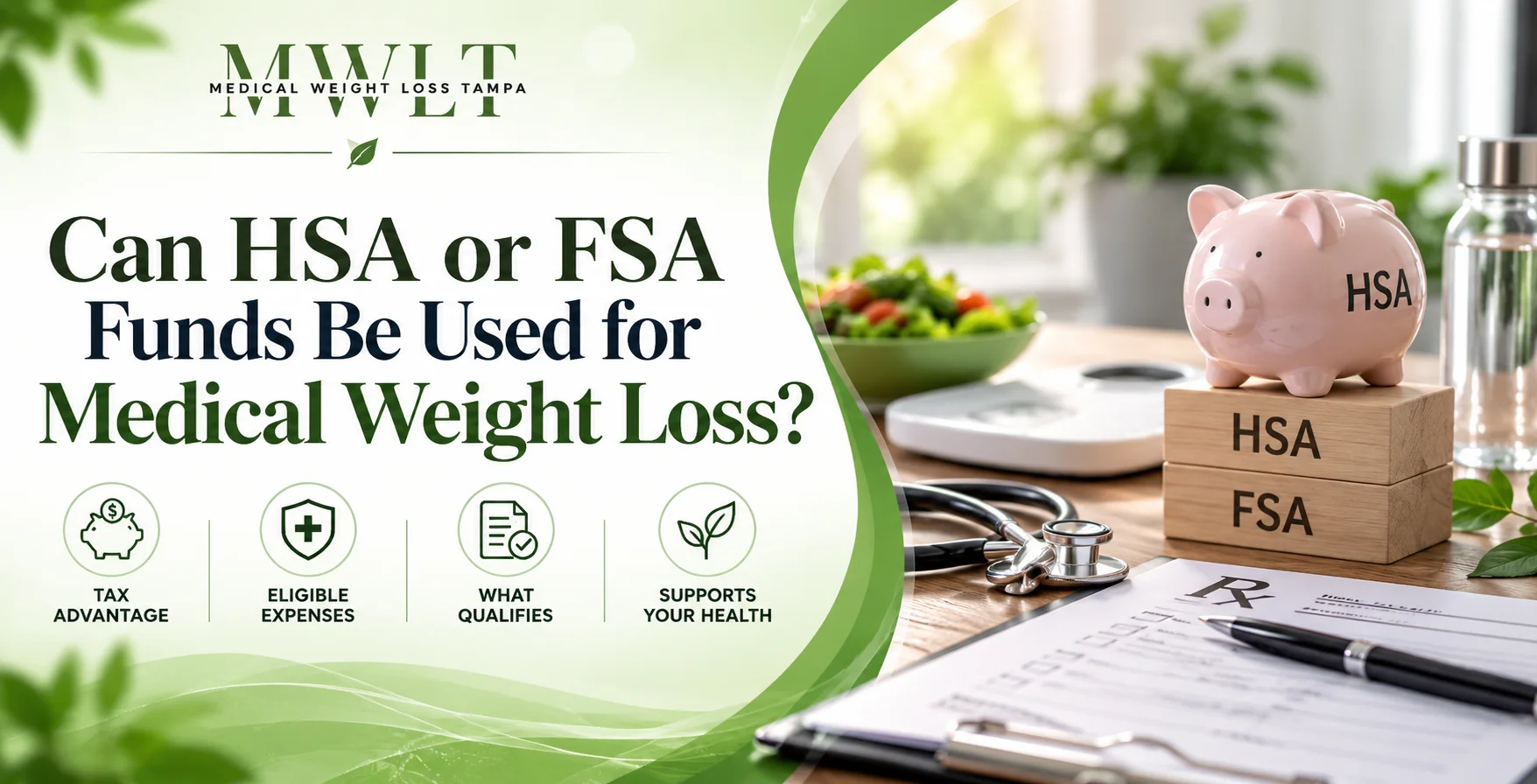
You can use Hsa or FSA fund for medical weight loss, but only when a physician diagnoses a specific disease, such as obesity, and prescribes treatment for it. The IRS treats weight loss as a qualified expense under Section 213(d) solely when it's medical necessity, not a lifestyle upgrade. Cosmetic-motivated spending doesn't qualify, full stop.
FLORIDA, BY THE NUMBERS
of Florida adults now carry obesity or overweight status
lost from Florida's GDP annually to obesity-linked costs
paid out-of-pocket by Florida households for obesity-related care each year
Key Takeaways
- HSA and FSA funds cover medical weight loss only when a physician diagnoses a disease like obesity, hypertension, or type 2 diabetes and documents it in writing.
- A Letter of Medical Necessity (LOMN) is the single document that separates a reimbursed claim from a denied one, and most patients never ask their provider for it.
- Prescription GLP-1 medications qualify automatically once prescribed. Gym memberships and diet food generally don't, even with a doctor's blessing.
- 2026 contribution limits are $4,400 for individual HSAs and $8,750 for family coverage. FSA caps landed at $3,400.
- Florida's obesity burden runs above the national curve, and Tampa Bay clinics are seeing a documented spike in HSA- and FSA-funded consultations tied to GLP-1 demand.
- Misusing HSA funds for non-qualifying weight loss triggers ordinary income tax plus a 20% penalty if you're under 65.
What the IRS Actually Says About Weight Loss and Your HSA
Section 213 of the Internal Revenue Code covers this, and it's narrower. Medical expenses have to be primarily for treating or preventing disease. Not related to health. Treating disease.
In its 2026 guidance, the IRS states plainly that a weight-loss program is a qualified medical expense when it treats a specific disease diagnosed by a physician, naming obesity, diabetes, hypertension, and heart disease directly. Obesity itself counts as a diagnosable disease under this rule. A lot of patients miss that, and so, frankly, do a few billing departments. For the exact wording, IRS Publication 502 is the source document worth bookmarking.
The same guidance says exercise for general health, even doctor-recommended, doesn't qualify. Swimming lessons don't. A standard gym membership doesn't, unless it exists solely to treat a diagnosed condition. So the test isn't what you're buying, it's why a physician says you need it, on paper, with a diagnosis code attached. Our team walks new Tampa patients through exactly that distinction during initial consultations, before any money moves.
Take A Look At the Diagnosis to Reimbursed Claim Timeline
The 4-step compliance path required under IRS Section 213(d)
Clinical Evaluation & Diagnosis
A licensed physician measures BMI, evaluates metabolic biomarkers (hypertension, type 2 diabetes, or obesity), and enters an official ICD-10 medical diagnosis on file.
Letter of Medical Necessity (LOMN)
Your provider issues a written LOMN specifying that medical weight loss or GLP-1 therapy is required to treat a diagnosed disease, not for general wellness.
Eligible Payment or Direct Billing
Pay program copays, laboratory tests, or GLP-1 medications using your HSA/FSA debit card or out-of-pocket at pre-negotiated clinic cash rates.
Substantiation & Pre-Tax Reimbursement
Submit your itemized medical receipt along with the signed LOMN to your benefits administrator for tax-free approval and instant audit safety.
Which Weight Loss Treatments Actually Qualify?
Some items on a clinic invoice qualify automatically. Some need paperwork. Some never will, regardless of what a receptionist tells you over the phone. Our GLP-1 program page breaks down which of our own services fall into each column.
| Expense | HSA Eligible | FSA Eligible |
|---|---|---|
| Physician-prescribed GLP-1 (Wegovy, Zepbound, etc.) | Yes, with prescription | Yes, with prescription |
| Structured program treating diagnosed obesity | Yes, with LOMN | Yes, with LOMN |
| Nutritional counseling for obesity or diabetes | Yes, with diagnosis | Yes, with diagnosis |
| Body composition or metabolic testing | Yes, diagnostic | Yes, diagnostic |
| Standard gym membership | No, generally | No, generally |
| Diet meal delivery, no diagnosis on file | No | No |
| Weight loss for appearance only, no diagnosis | No | No |
⚠WHERE PATIENTS GET BURNED
Paying for a weight loss program with HSA funds before you have a diagnosis on file is the single most common way this goes wrong. If the IRS or your plan administrator later asks for substantiation and there's no LOMN, no diagnosis code, nothing dated appropriately, the withdrawal becomes taxable income. Under 65, add a 20% penalty on top. There's no grace period for good intentions here.
What GLP-1 Coverage Actually Costs, With and Without HSA Funds
The spread here is where the HSA conversation earns its keep. GLP-1 list prices sit north of $1,000 a month for drugs like Wegovy and Zepbound as of 2026. Almost nobody pays that number. What people actually pay depends on three levers: whether insurance covers the prescription for weight loss specifically, whether a manufacturer savings card applies, and whether HSA or FSA dollars are absorbing the copay pre-tax.
Monthly out-of-pocket range by payment path, GLP-1 prescriptions, 2026:
Running HSA or FSA dollars through even the cash-pay tier changes the real cost, because that money was never taxed going in. On a $449 monthly fill, a patient in the 24% federal bracket effectively saves over $100 a month just by routing the payment through pre-tax funds instead of a standard debit card.
Does Florida's Insurance Landscape Complicate This?
Florida doesn't mandate obesity treatment coverage the way some states are beginning to. That’s why HSA and FSA planning is more important here than in a state with weight-loss coverage baked into commercial plans. The CDC's obesity data portal tracks this state by state, and Florida consistently sits above the national median.
Tampa Bay's burden isn't abstract. Statewide, obesity-attributed costs reduced Florida's GDP by 1.8% in the most recent year measured, and heart and vascular disease account for over half of obesity-attributed deaths statewide. Patients in Hillsborough, Pinellas, and Pasco counties are, on average, paying retail or near-retail for GLP-1 prescriptions unless their employer plan explicitly names weight-loss drugs as covered, which most don't yet.
“With insurance coverage, you can definitely get it for reasonable amounts. I have patients who get it for $50 a month.”
— Dr. Supriya Rao, M.D., board-certified in internal medicine, gastroenterology, and obesity medicine, on GLP-1 costs under coverage
Florida has no state income tax, so an HSA's federal tax advantage isn't diluted the way it can be elsewhere. Every dollar routed through pre-tax funds for a qualifying treatment plan stretches further here. Our Tampa clinic locations page lists which offices handle HSA and FSA direct billing on site.
WHAT OUR TAMPA PATIENT DATA SHOWS
more patients asked about HSA/FSA eligibility at intake in 2026 than in 2024, based on our internal front-desk survey
new patients arrive without a Letter of Medical Necessity already on file
of qualifying patients recover the LOMN and get reimbursed within one billing cycle once we flag the paperwork gap
Common Mistakes That Result in Denied HSA/FSA Claims
- Paying before diagnosis. Timing matters to the IRS. A treatment dated before the diagnosis reads as elective, not medical.
- Assuming a prescription alone is enough. It usually is for medication, but program fees and counseling still need the LOMN tied to a documented condition.
- Treating gym access as a weight loss expense. Per IRS Q10 guidance, a standard membership stays ineligible even with a doctor's note, unless the membership exists solely to treat the diagnosed condition.
- Losing the paperwork trail. Plan administrators can request substantiation well after the transaction. No LOMN on file, no reimbursement, regardless of intent.
- Confusing FSA "use it or lose it" timing with HSA rollover. FSA funds generally expire at plan-year end (some plans allow a $680 carryover); HSA funds roll over indefinitely, so the urgency to document is different for each.
How Do You Get Started With HSA-Funded Weight Loss Care in Tampa?
Start with the diagnosis, not the drugstore. A physician visit that measures BMI, screens for comorbidities, and documents findings is the entire foundation. Everything downstream depends on that first record existing and being dated correctly.
“Most patients who come through our Tampa clinic already qualify for HSA or FSA coverage. They just never got the letter that proves it. That's the whole gap, and it's a fixable one.”
— Clinical Director, Medical Weight Loss Tampa
From there, confirm your plan's specific rules. Not every FSA administrator interprets "structured weight loss program" the same way. Checking your plan or reviewing HealthCare.gov's glossary of qualified medical expenses before you spend takes ten minutes and avoids a denied claim months later.
Not sure if your case qualifies?
A ten-minute consultation at Medical Weight Loss Tampa can confirm whether your situation meets the IRS diagnosis standard before you spend a dollar of HSA or FSA money on the wrong thing.
Frequently Asked Questions
Can I use HSA funds for bariatric surgery consultation costs?
Yes. Consultations tied to a diagnosed obesity-related condition qualify the same way medical weight loss visits do.
What happens to unused FSA weight-loss funds at year end?
Most FSAs follow a use-it-or-lose-it rule, though many 2026 plans allow a limited carryover, up to $680, check your specific plan document.
Does Medicare cover GLP-1 medications for weight loss the same way HSA rules apply?
No. Medicare rules are separate from HSA/FSA tax rules and have historically excluded weight-loss-only GLP-1 coverage, though bridge coverage for select high-risk groups emerged in 2026.
Disclaimer: The information in this article is provided for educational purposes only and does not constitute formal tax, legal, or individual medical advice. Eligibility rules vary by plan administrator. Please consult a qualified tax professional or healthcare provider at Medical Weight Loss Tampa to discuss your specific care plan.