Medical Weight Loss Tampa | Medical Weight Loss | Tampa, FL
813.269.7546 | medicalweightlosstampa.com
Explained by the Clinical Team at Medical Weight Loss Tampa
Published: August 17, 2026 | Updated: August 23, 2026
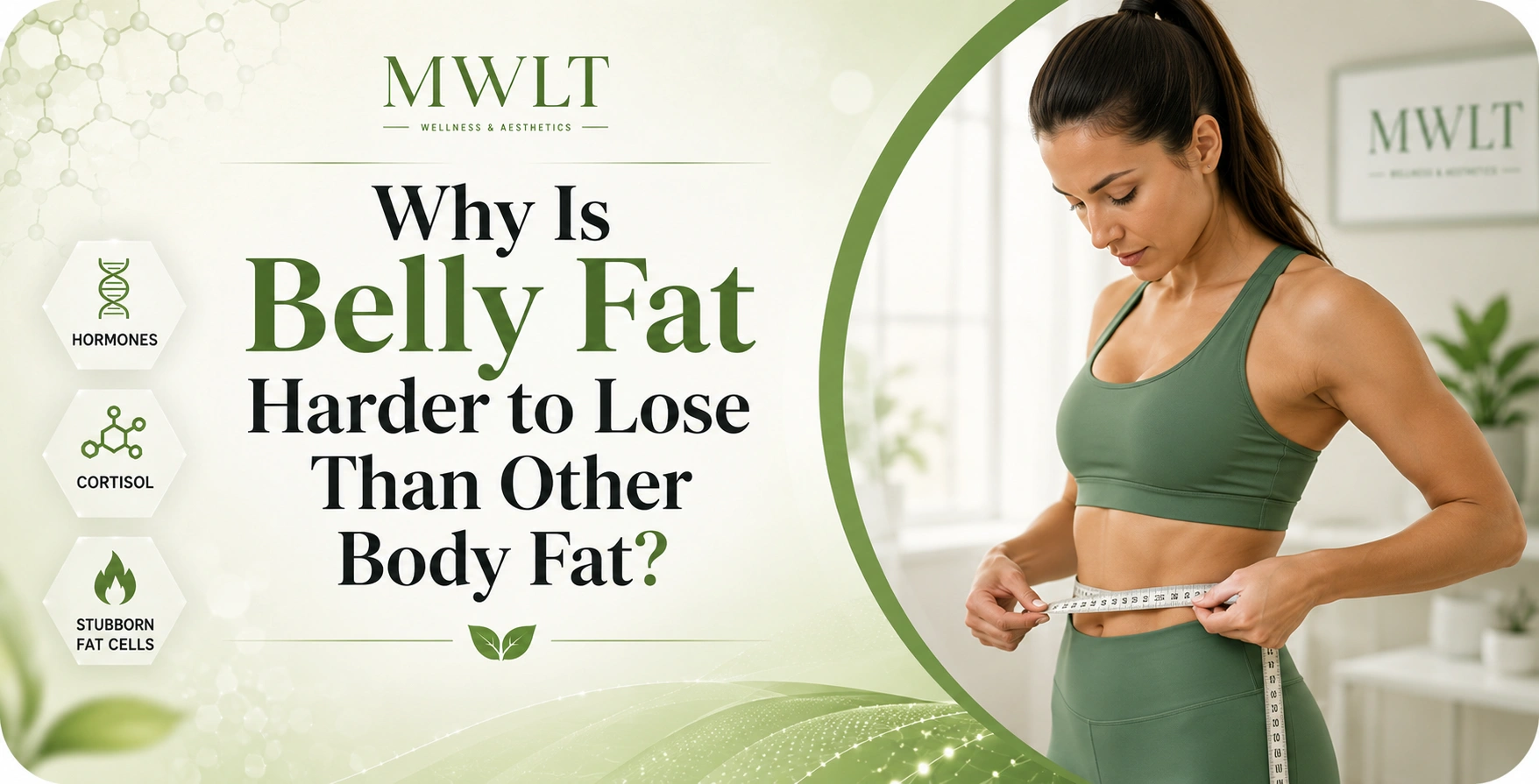
Belly fat resists diets because visceral fat acts like a hormone gland. Not stored energy. It pumps out cortisol and inflammatory signals other fat never touches. Fewer fat burning receptors live in the belly too. Age, stress, and insulin resistance pile on after 40. A medical approach closes the gap. Willpower alone rarely does.
KEY POINTS
- Visceral fat behaves like an active hormone organ. Not passive storage.
- Fewer beta receptors sit in the belly. They burn slower.
- Cortisol and hormone shifts push weight toward the waist.
- Waist size predicts health risk better than total weight.
- A structured medical plan closes what diet alone cannot.
Tampa summers do not make this easier. Humidity. Long work hours. Restaurant temptation everywhere. Hillsborough County patients tell us the same thing constantly. Arms and legs slim down first. The stomach barely moves. That is not bad luck. That is biology fighting a narrow strategy. Doctors at Medical Weight Loss Tampa see this weekly. Patients arrive frustrated after months of clean eating. The scale drops. The waistband does not. Understanding this resistance is the first real step. Most people give up right before things actually turn.
Why Does Stubborn Fat Sit Around The Waist?
Visceral fat resists loss because it acts as endocrine tissue. It releases hormones that promote storage and block breakdown. Most patients never hear this in a typical gym consult.
The short version
- Visceral fat wraps around your liver, intestines, and pancreas.
- It secretes cytokines and hormones subcutaneous fat does not.
- These signals raise insulin resistance and slow breakdown.
- Belly fat cells carry fewer beta receptors than arm fat.
- Fewer receptors mean weaker signals during a calorie deficit.
Harvard Health Publishing links visceral fat to diabetes and heart risk. It behaves almost like an extra organ. Strange way to think about fat. But accurate. It explains why cutting calories alone stalls. Source: Harvard Health Publishing.
of total body fat is subcutaneous, not visceral
age when visceral storage accelerates fastest
What Role Does Cortisol Play In Belly Fat Storage?
Chronic stress raises cortisol. Elevated cortisol tells the body to store waist fat. It happens slowly, without any obvious trigger most days.
Persistent high pressure prevents full physical recovery. That biological loop hardens stubborn midsection weight, rendering basic calorie restriction far less effective over time. Targeted metabolic care combined with active stress reduction helps interrupt this silent accumulation pattern, giving your body a real chance to shift out of constant storage mode and burn abdominal fat safely.
- Cortisol is the body's main stress hormone.
- Long term stress keeps cortisol elevated for weeks.
- Elevated cortisol increases cravings for sugar and fat.
- It also tells fat cells near the abdomen to grow.
- Tampa's dynamic work culture keeps patients stuck here.
National Institutes of Health review confirms this link. The pattern holds across age groups. It strengthens after 40, when hormones naturally decline. Source: National Institutes of Health review.
“Waist circumference tells us more about metabolic risk than the number on a scale ever will.”
— International Atherosclerosis Society and ICCR Working Group on Visceral Obesity, 2020
Does Age Make This Type Of Fat Worse?
Yes. Aging activates stem cells that build fresh fat cells. Not just enlarge old ones. Most patients assume it is only about calories. It rarely is past 40. This change happens because aging stem cells, specifically age-enriched preadipocytes, receive biochemical signals through pathways like LIFR, actively driving new fat cell creation deep inside the abdomen rather than simple fat storage.
At the same time, declining anabolic hormones reduce baseline muscle mass, lowering your resting metabolic rate and compounding the effect. Because visceral fat cells host a higher density of cortisol receptors, elevated stress levels preferentially direct new storage straight to the waistline.
What changes after 40
- A 2025 Science study found a stem cell tied to aging fat.
- These cells multiply faster and create brand new fat cells.
- Estrogen decline shifts storage from hips toward the waist.
- Testosterone decline reduces muscle mass and slows metabolism.
- Sleep quality drops with age. Poor sleep raises cortisol further.
Standard calorie restriction or intense cardio cannot override this underlying cellular mechanism, which is why sustainable progress requires targeted metabolic strategies aimed at hormonal balance and cellular signaling. A common complaint among Tampa patients in their 40s. The same workout that worked at 30 stops working now. Not failure. Just a different hormonal environment.
Tired Of Losing Weight Everywhere Except Your Stomach?
Medical Weight Loss Tampa builds a plan around your hormones. Not just your calories. A $47 consultation includes a full assessment and a personalized treatment path.
How Does This Fat Compare To Other Fat Types?
Not all fat behaves the same way. Knowing the difference changes how you treat it. One category needs medicine, not just motivation.
Fat Type Comparison
A side-by-side look at location, behavior, and body response.
| Fat Type | Location | Behavior | Response |
|---|---|---|---|
| Subcutaneous Fat | Under skin, arms and thighs | Passive storage, fewer signals | Responds well to diet and cardio |
| Visceral Fat | Deep belly, around organs | Hormonally active, drives inflammation | Needs a metabolic approach |
| Hormonal Belly Fat | Waist and lower abdomen | Tied to cortisol and menopause | Improves with hormone support |
| Post 40 Visceral Fat | Deep abdominal wall | New cells form faster with age | Best managed medically |
What Actually Works Against A Stubborn Midsection?
A combined approach works best. Pair medical support with strength training and sleep repair.
What the evidence supports
- Resistance training two to three times weekly preserves muscle.
- Protein intake near 1.2 to 1.6 grams per kilogram helps.
- GLP-1 therapies preferentially target visceral fat over subcutaneous fat.
- Consistent sleep lowers cortisol and improves insulin response.
- Medical monitoring catches plateaus before frustration sets in.
2025 SURMOUNT postmenopausal analysis found a 20 centimeter waist drop with tirzepatide. Just 4 centimeters with placebo. That gap matters. It shows medical support beats diet alone here. Source: 2025 SURMOUNT postmenopausal analysis.
“We stopped telling patients to just eat less and move more years ago. The ones who struggle most almost always have a hormonal piece we need to treat. Not just a willpower piece.”
— Dr. Emily Devol Webster, Medical Director, Medical Weight Loss Tampa
What Results Are Tampa Bay Patients Actually Seeing?
Patients on a supervised, hormone aware program see changes within months. Not years.
Supervised Program Patient Results
Case example: Waist and BMI change over an eight-month supervised program.
| Measure | Before | After |
|---|---|---|
| Waist Circumference | 50 inches | 42 inches |
| Body Weight | 232 lbs | 185 lbs |
| BMI Category | 31.5, Obese | 25.2, Near Normal |
| Program Length | November 2024 | 8 months, July 2025 |
Our internal patient surveys show waist size is what patients care about most. Ahead of scale weight, easily. Roughly seven in ten name a stubborn stomach as their top concern. Not overall weight. That number surprised us at first. It no longer does. Clinical reality aligns closely with this patient priority. Federal health data published by the National Institutes of Health (NIH) reveals that over 50% of U.S. adults carry high-risk abdominal obesity. Measuring waist circumference directly tracks visceral fat reduction, giving patients a far clearer marker of metabolic progress than standard scale weight alone. Source: National Institutes of Health (NIH).
Tirzepatide and Retatrutide therapy pair with nutritional counseling here. Body contouring through Evolve Transform treats the cosmetic side too. That combination matters more here. Florida clothing hides less. Summer starts early.
A Word Of Caution
Crash diets and extreme fasting can raise cortisol further. That worsens storage over time. Rapid, unsupervised weight loss affects blood pressure too. Always lose weight under medical supervision. Especially past 40.
Ready To Target The Fat That Diet And Exercise Left Behind?
Book your $47 consultation with Medical Weight Loss Tampa today. Serving Tampa, Carrollwood, and Citrus Park at 5111 Ehrlich Rd, Tampa, FL.
Frequently Asked Questions
Can stress eating alone explain a stubborn stomach?
Partly. Cortisol driven storage happens even without overeating sometimes.
Does Florida heat affect fat loss around the waist?
Not directly. Heat raises water loss, which can mask real progress.
How soon can Tampa patients start a consult?
Most clinics offer same week scheduling for the initial visit.
Is this type of treatment covered by insurance?
Coverage varies by plan. Many GLP-1 therapies need prior authorization.
Disclaimer: This article is for general education and is not a substitute for individualized medical advice. Speak with a licensed provider before starting any weight loss treatment.